Knives are a very useful tool for outdoor activities such as camping, hiking, and hunting. They can be used for a variety of tasks, including preparing food, cutting rope or cordage, carving wood, and even self-defense.
“EVERY KNIFE HAS A STORY “
VISIT MY WEBSIE: CUTLER ENTERPRISE
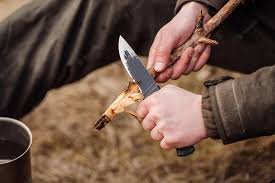
In camping and hiking, a good knife can be used to prepare meals, cut through packaging and other materials, and even serve as a makeshift screwdriver or can opener. Knives are also often used for carving and whittling, which can be a fun and relaxing activity while out in nature.
Hunting knives, on the other hand, are designed specifically for field dressing game animals. These knives typically have a thin, sharp blade and a handle that is easy to grip and control. They can be used to skin, gut, and debone the animal, as well as to prepare the meat for cooking or preservation.
Overall, knives are an essential piece of equipment for anyone who enjoys spending time outdoors, as they can be used for a wide range of tasks and can be a vital tool in a variety of situations.
Why are knives important in camping?
Knives are important in camping for a number of reasons. They can be used for a wide range of tasks, including preparing food, cutting through packaging and other materials, carving and whittling, and even serving as a makeshift screwdriver or can opener.
One of the primary uses of a knife while camping is preparing food. Knives can be used to slice and chop vegetables, cut meat, and perform other tasks necessary for cooking over a campfire or stove. A good knife can also be used to open cans and packaging, which can be useful if you’re camping in an area without access to a store or other amenities.
Knives can also be used for carving and whittling, which can be a fun and relaxing activity while out in nature. This can include making small toys or crafts, as well as carving tools or utensils.
In addition to these practical uses, knives can also be important in emergency situations. They can be used to cut through rope or cordage to free someone who is stuck or tangled, or to cut through a stuck zipper or other material. In some cases, a knife may even be used as a makeshift self-defense tool if necessary
How is a knife used in hunting?
In hunting, a knife is typically used for field dressing the animal after it has been killed. Field dressing involves skinning, gutting, and deboning the animal, as well as preparing the meat for cooking or preservation.
Hunting knives are designed specifically for this purpose and usually have a thin, sharp blade and a handle that is easy to grip and control. The blade is used to make precise cuts through the skin, muscle, and other tissue, while the handle provides a secure grip and allows the user to apply the necessary pressure and control.
Field dressing an animal can be a delicate process, and a good hunting knife is essential for performing the job efficiently and effectively. In addition to field dressing, hunting knives may also be used for other tasks such as preparing food, carving and whittling, and even self-defense in some cases.
What is the use of knife in hiking?
Knives are an essential tool for hikers, as they can be used for a wide range of tasks while out on the trail. Some of the primary uses of a knife while hiking include:
- Preparing food: Knives can be used to slice and chop vegetables, cut meat, and perform other tasks necessary for cooking on a stove or over a campfire.
- Cutting through packaging and other materials: Knives can be used to open cans and packaging, as well as to cut through rope or cordage.
- Carving and whittling: Knives can be used for carving and whittling, which can be a fun and relaxing activity while out in nature. This can include making small toys or crafts, as well as carving tools or utensils.
- Emergency situations: In some cases, a knife may be necessary for emergency situations, such as cutting through a stuck zipper or other material, or freeing someone who is stuck or tangled.
What is the best knife for hiking?
When choosing a knife for hiking, it is important to consider a few key factors in order to find the best option for your needs. Some of the things to consider when selecting a knife for hiking include:
- Blade material: Look for a knife with a blade made of a durable material such as stainless steel or high carbon steel. These materials are less prone to corrosion and can hold an edge well.
- Blade length: A blade that is 3-4 inches long is generally sufficient for most hiking tasks, such as preparing food and cutting through packaging.
- Handle material: Choose a knife with a handle made of a durable and comfortable material, such as plastic or rubber. These materials are more slip-resistant and can be easier to grip, especially when your hands are wet or sweaty.
- Weight and size: Look for a knife that is lightweight and compact, as it will be easier to carry around and won’t weigh you down on the trail.
- Price: Consider your budget when selecting a knife for hiking. There are many good quality knives available at a wide range of price points, so you should be able to find one that fits your needs and budget.
Overall, the best knife for hiking is one that is durable, lightweight, compact, and comfortable to use, and that fits your specific needs and budget.
Which is the best knife for hiking?
There are many different knives that could be considered the “best” for hiking, as the best knife will depend on your specific needs and preferences. Some factors to consider when choosing a knife for hiking include blade material, blade length, handle material, weight and size, and price.
Some popular options for hiking knives include:
- Morakniv Companion: This knife has a durable stainless steel blade and a rubber handle, making it a good all-around option for hiking.
- Gerber Bear Grylls Ultimate Knife: This knife has a high carbon stainless steel blade and a rubber handle, making it a durable and comfortable choice for hiking.
- Spyderco Tenacious: This knife has a stainless steel blade and a G-10 handle, making it a strong and lightweight option for hiking.
- Kershaw Leek: This knife has a stainless steel blade and a composite handle, making it a lightweight and versatile choice for hiking.
Ultimately, the best knife for hiking will depend on your specific needs and preferences. Consider the tasks you will be using the knife for, your budget, and the features that are most important to you when selecting a knife.
What can a knife be used for in the wild?
A knife can be used for a variety of tasks in the wild, including:
- Preparing food: Knives can be used to slice and chop vegetables, cut meat, and perform other tasks necessary for cooking on a stove or over a campfire.
- Cutting through packaging and other materials: Knives can be used to open cans and packaging, as well as to cut through rope or cordage.
- Carving and whittling: Knives can be used for carving and whittling, which can be a fun and relaxing activity while out in nature. This can include making small toys or crafts, as well as carving tools or utensils.
- Emergency situations: In some cases, a knife may be necessary for emergency situations, such as cutting through a stuck zipper or other material, or freeing someone who is stuck or tangled.
- Self-defense: In some cases, a knife may be used as a makeshift self-defense tool if necessary.
Overall, a good knife is an essential piece of equipment for anyone spending time in the wild, as it can be used for a wide range of tasks and can be a vital tool in a variety of situations.
Why are knife skills so important?
Knife skills are important for a variety of reasons, including:
- Safety: Proper knife skills can help reduce the risk of accidents and injuries when using a knife. This includes using the correct grip, cutting away from your body, and maintaining a sharp blade.
- Efficiency: Good knife skills can help you work more efficiently and effectively, especially in the kitchen. This can include tasks such as slicing, dicing, and mincing ingredients, as well as preparing food more quickly and accurately.
- Quality of food: Proper knife skills can also help improve the quality of the food you prepare. For example, using the correct cutting techniques can help preserve the texture and flavor of ingredients, as well as ensure that they cook evenly.
- Confidence: Developing good knife skills can also boost your confidence in the kitchen and help you feel more comfortable and capable when preparing food.
Why is a hunting knife important in survival?
A hunting knife is important in survival because it can be used for a variety of tasks that are essential for maintaining your well-being in a wilderness or survival situation. Some of the ways in which a hunting knife can be used in survival include:
- Field dressing game animals: A hunting knife can be used to field dress game animals, which involves skinning, gutting, and deboning the animal, as well as preparing the meat for cooking or preservation. This is an important task in survival situations because it can provide a source of food and nutrients.
- Preparing food: A hunting knife can also be used to prepare food in other ways, such as slicing and chopping vegetables and fruits, and cutting through packaging and other materials.
- Building shelter: A hunting knife can be used to cut through branches and other materials to build a shelter or other structures.
- Making tools: A hunting knife can be used to carve and shape wood and other materials to create tools and other useful items.
Are throwing knives used for hunting?
Throwing knives are not typically used for hunting. Throwing knives are designed for throwing at a target and are not typically used for cutting or slicing. While they can be used as a makeshift weapon in some situations, they are not typically designed or intended for hunting purposes.
Hunting knives, on the other hand, are designed specifically for field dressing game animals, which involves skinning, gutting, and deboning the animal, as well as preparing the meat for cooking or preservation. Hunting knives typically have a thin, sharp blade and a handle that is easy to grip and control, making them well-suited for these
What is the difference between a hunting knife and a skinning knife?
Hunting knives and skinning knives are both designed for use in hunting and are similar in many ways, but there are some key differences between the two.
A hunting knife is a general-purpose knife that can be used for a variety of tasks associated with hunting, such as field dressing game animals, preparing food, and building shelter. Hunting knives typically have a sturdy and durable blade and a handle that is easy to grip and control.
A skinning knife, on the other hand, is specifically designed for skinning and preparing game animals. Skinning knives have a thin and flexible blade that is well-suited for separating the skin from the flesh of the animal. They may also have a curved or hooked blade to assist with this task.
Overall, while both hunting knives and skinning knives can be used for a variety of tasks associated with hunting, skinning knives are specifically designed for skinning and preparing game animals, while hunting knives are more general-purpose tools.
What is the point of a hunting knife?
The main purpose of a hunting knife is to assist with tasks related to hunting and preparing game animals. These tasks may include field dressing, skinning, gutting, and deboning the animal, as well as preparing the meat for cooking or preservation. Hunting knives are designed specifically for these tasks and typically have a thin, sharp blade and a handle that is easy to grip and control.
In addition to these tasks, hunting knives may also be used for a variety of other purposes, such as preparing food, building shelter, making tools, and even self-defense in some cases.
Overall, the point of a hunting knife is to provide a tool that is specifically designed for the tasks associated with hunting, such as field dressing and preparing game animals, as well as a range of other tasks that may be useful in a wilderness or survival situation.
Why are hunting tools important?
Hunting tools are important because they can assist with a variety of tasks related to hunting and preparing game animals, making the process more efficient and effective.
Some examples of hunting tools include:
- Hunting knives: These are specialized knives that are used for field dressing, skinning, gutting, and deboning game animals, as well as preparing the meat for cooking or preservation.
- Game processing equipment: This can include items such as meat grinders, sausage stuffers, and dehydrators, which are used to process and preserve game meat.
- Hunting optics: These include items such as binoculars, scopes, and rangefinders, which are used to assist with sighting and targeting game animals.
- Hunting clothing and accessories: This can include items such as camouflage clothing, boots, and gloves, which are designed to help hunters blend in with their surroundings and stay warm and dry in various weather conditions.
What is the hunters most important item of?
The most important item for a hunter will depend on the specific needs and preferences of the individual hunter. However, some items that are generally considered essential for hunters include:
- A reliable hunting weapon: This could be a firearm, bow, or other type of hunting implement, depending on the preferences and abilities of the hunter.
- Quality hunting optics: Binoculars, scopes, and rangefinders can be essential for spotting and targeting game animals, and are essential for many hunters.
- A good hunting knife: A hunting knife is an essential tool for field dressing, skinning, gutting, and deboning game animals, as well as preparing the meat for cooking or preservation.
- Adequate clothing and gear: Hunters will need clothing and gear that is appropriate for the weather and terrain they will be hunting in, including items such as camouflage clothing, boots, and gloves.
For what purpose hunters use tools?
Hunters use a variety of tools for a range of purposes, including:
- Spotting and targeting game animals: Tools such as binoculars, scopes, and rangefinders can help hunters spot and target game animals from a distance.
- Hunting and killing game animals: Tools such as firearms, bows, and other hunting implements are used by hunters to hunt and kill game animals.
- Field dressing and preparing game animals: Tools such as hunting knives, game processing equipment, and other specialized tools are used by hunters to field dress and prepare game animals, including tasks such as skinning, gutting, deboning, and preserving the meat.
- Staying warm and dry: Hunters may use tools such as clothing and gear, including items such as camouflage clothing, boots, and gloves, to stay warm and dry in various weather conditions.
Which tool is used for hunting in hunting society?
In hunting societies, the tools used for hunting will vary depending on the specific customs and traditions of the society, as well as the resources and technology available to them.
In some hunting societies, traditional hunting implements such as bows, spears, and traps may be used. In other societies, more modern hunting tools such as firearms may be used.
Regardless of the specific tools used, hunting societies generally place a high value on the skills and knowledge required for successful hunting, and may have specific rituals, customs, and traditions associated with hunting and the use of hunting tools.
Overall, the specific tools used for hunting in hunting societies will vary depending on the customs, traditions, and resources of the society.
What is the oldest known hunting device?
The oldest known hunting devices are believed to be spears, which have been used by humans for hunting for tens of thousands of years. The use of spears for hunting likely predates the use of other hunting implements such as bows and arrows, and may have played a key role in the development of human societies and cultures.
Spears are simple but effective hunting weapons that can be used to kill or incapacitate a variety of game animals, and have been used by a wide range of societies throughout history. They are also relatively easy to manufacture and maintain, which may have contributed to their longevity as a hunting implement.
Overall, spears are the oldest known hunting devices and have been used by humans for hunting for tens of thousands of years.
What is the most skilled hunter?
It is difficult to determine who is the most skilled hunter, as hunting skills can vary widely depending on the specific circumstances and game animals being hunted, as well as the resources and technology available.
Some factors that may contribute to a hunter’s skill level include:
- Knowledge of the game animals being hunted: A skilled hunter will have a deep understanding of the behavior, habits, and habitats of the game animals they are hunting, and will be able to use this knowledge to their advantage when hunting.
- Physical fitness and endurance: A skilled hunter will typically be in good physical shape and have the endurance and stamina necessary to pursue game animals over long distances and in challenging terrain.
- Precision and accuracy: A skilled hunter will be able to use their hunting weapon with a high level of precision and accuracy, which is essential for successful hunting.
- Resourcefulness and adaptability: A skilled hunter will be able to adapt to changing circumstances and make the most of the resources and technology available to them.